A supplier management software (also called Supplier Lifecycle Management, or SLM) is a tool that unifies various aspects of supplier management, such as onboarding, performance evaluation, risk mitigation, and ERP/P2P integration, into a single solution.
Using this type of tool is essential to ensure that your partner network operates in full alignment with business goals, global regulations, and sustainability targets.
Global supply chains have never operated under such a high level of complexity. Between geopolitical disruptions, market fluctuations, and increasingly strict regulatory pressure, the demand for transparency and compliance has become non-negotiable.
In this environment, managing business partners has become a strategic pillar of corporate governance and risk mitigation. To ensure this is done effectively and securely, technology has become the key enabler.
Keep reading to explore the essential capabilities of SLM platforms, their competitive advantages, and the 8 best solutions on the market to support your leadership team’s decision-making.

What is supplier management software?
Supplier management software is a centralized technology platform designed to orchestrate the entire lifecycle of business partner relationships. This includes everything from sourcing and initial qualification to performance management and offboarding.
In practice, this means centralizing areas such as:
- registration and onboarding,
- qualification and requalification,
- document and contract management,
- performance evaluation (scorecards),
- risk monitoring.
In addition, a supplier management system automates workflows and consolidates the supplier’s “golden record,” enabling data-driven sourcing and risk mitigation decisions.
Historically, many organizations managed this information in silos, relying on scattered spreadsheets and untraceable emails. SLM replaces this fragmentation with a single, reliable data foundation, known as a Single Source of Truth.
This ensures that Supply Chain Management, Procurement, and GRC (Governance, Risk, and Compliance) executives, for example, have complete visibility into who their partners are, what risks are associated with them, and how they are performing.
Read also: What is supply chain risk management software and how to choose the best one
What are the key features of a supplier management system?
For supplier management software to deliver strategic value, it must go beyond basic vendor registration and simple manual controls. Solutions like this enabled Nauterra, Latin America’s largest seafood manufacturer, to achieve zero factory shutdowns over the past three years due to supplier issues and reduce raw material waste by 80%.
Leading platforms offer capabilities such as:
Automated qualification and onboarding
This feature provides rigorous document validation, automated due diligence processes, self-service portals, KYC collection, approval workflow automation, and streamlined integration of new partners with a significant reduction in operational friction.
Continuous risk and compliance management
Qualification rules, contracts, risk databases, and workflows must be monitored in real time to strengthen compliance with global regulations. A best-in-class system also prepares the supplier base for upcoming transitions, such as adapting to the future requirements of ISO 9001:2026.
Performance evaluation
One of the most important capabilities is the ability to establish KPIs and SLAs, perform historical analysis, define improvement plans, conduct regular quality audits, and trigger Corrective and Preventive Action Plans (CAPA) whenever service levels fall below required standards.
Data governance and Artificial Intelligence (AI)
The foundation of any reliable AI initiative is data quality. Advanced tools use Artificial Intelligence and agentic AI architectures to automate supplier risk classification. However, this level of automation requires a secure and traceable technology foundation aligned with AI governance frameworks such as ISO 42001.
Supplier portal
Efficient partner and supplier management must be a two-way street. In other words, just as your company needs access to supplier performance data, suppliers also need visibility into relevant information about your company. Through a portal, suppliers should be able to securely and selectively access data related to their performance, qualification status, and even respond to nonconformities when needed.

What are the benefits of using supplier management software?
Investing in supplier management software delivers direct and indirect returns that impact business valuation and long-term sustainability. Some of the main measurable benefits include:
Resilience and business continuity
Having full visibility into supplier operations allows you to anticipate disruptions and activate alternative supply networks quickly when necessary. Technology-enabled supply chains preserve value and continuity even in highly uncertain environments.
Competitive advantage through ESG
ESG (Environmental, Social, and Governance) is no longer just a marketing add-on. It has become a strategic pillar. The right software turns supply chain sustainability into a market asset. This happens, for example, through the structured collection of sustainability indicators. As a result, the system delivers transparency from raw material extraction to final delivery.
Cost reduction and operational efficiency
Eliminating manual bottlenecks accelerates time to market. In addition, supplier management software supports continuous compliance monitoring, helps prevent costly fines, reduces regulatory and continuity risks, and protects against irreversible brand reputation damage.
Operational efficiency and governance
Finally, a supplier lifecycle management system also supports onboarding and nonconformity handling. This reduces missed renewals and legal exposure, for example, while also supporting sourcing and savings strategies.
Read more: What is Third-Party Risk Management and what makes it essential
How do you choose an SLM solution?
Selecting the right system requires a careful assessment of the company’s long-term needs. Only then can the organization identify the tool that best aligns with the demands of its operations, products or services, industry, and supply chain.
That’s why this evaluation process should involve multiple areas of the business and be as tailored as possible. To reduce the risk of making the wrong choice, consider the following key criteria:
1. Map regulatory maturity and alignment with business objectives
Check whether the supplier management system supports the audits your company is likely to face. Understand whether the software is prepared to keep pace with emerging regulations, such as the EU AI Act and international human rights due diligence laws across the value chain.
Finally, assess whether the platform includes all the capabilities you expect, such as onboarding, risk management, CLM, scorecards, ERP integration, and more. This ensures the software will help achieve business outcomes such as reducing risk, accelerating onboarding, and lowering costs.
2. Prioritize integration capabilities and cybersecurity
Supplier management software cannot operate in isolation. It must offer robust APIs to integrate natively with your existing ecosystem, connecting seamlessly with ERPs, CRMs, and financial systems.
It is also critical to pay attention to cybersecurity, compliance with data protection certifications such as ISO 27001, and the existence of clear privacy policies.
3. Take a holistic view
Prioritize solutions that manage the supplier lifecycle through a GRC (Governance, Risk, and Compliance) lens. Purely transactional tools will not protect your brand from severe operational and reputational risks. In other words, choose an all-in-one solution with technology that maximizes business value while integrating smoothly with the rest of your enterprise stack.
The 8 best supplier management software solutions
The right technology depends on the complexity of your operation, but some platforms clearly stand out in the market. Below, we highlight the 8 leading supplier management software solutions that offer capabilities suited to a wide range of business needs. You simply need to determine which one best fits your company.
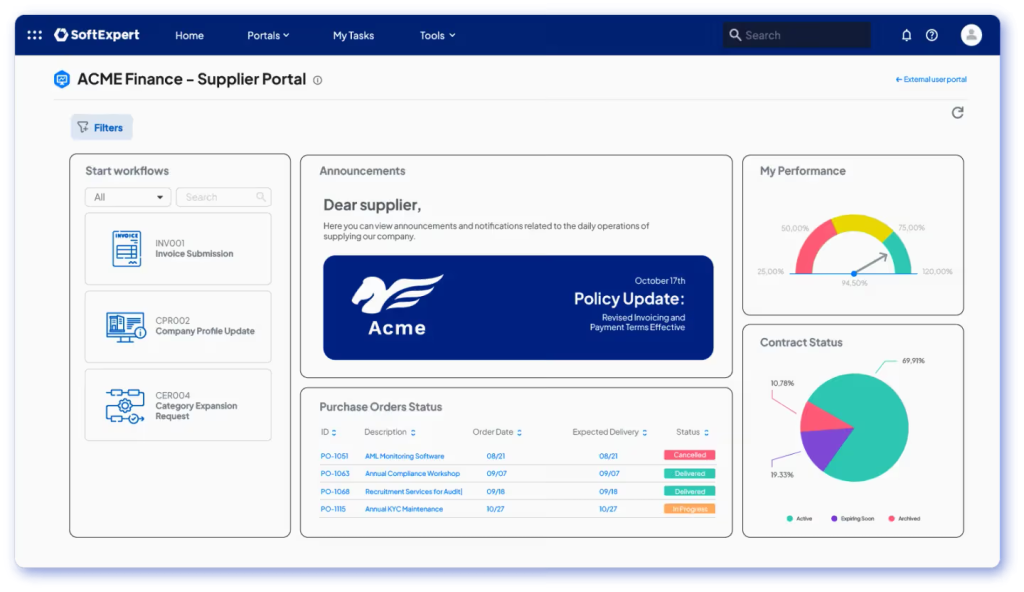
SoftExpert Suite
Software information:
Capterra rating: 4,6/5
G2 rating: 4,7/5
Features:
- Automated qualification and onboarding;
- Continuous audits, corrective and preventive action plans (CAPA);
- Native integration with ESG reporting;
- Built-in alignment with high-level regulatory standards, including ISO 9001 and ISO 14001;
- Data governance readiness for ISO 42001 and ISO 50001;
- Visual dashboards with real-time supplier performance insights, including scores, indicators, and performance rankings.
Pros:
- A truly systemic approach that goes beyond transactional procurement;
- Connects partner management to the core of Corporate Governance (GRC);
- Strong cost-effectiveness;
- Strong support for global audit readiness;
- Supplier lifecycle-oriented platform;
- Compliance and integration within a complete corporate management suite.
Cons:
- Due to the breadth of features, the initial learning curve can be steep;
- To fully unlock the platform’s value, some capabilities may require customization based on your company’s specific data and use cases;
- Higher cost for small businesses.
Far beyond a simple procurement showcase, SoftExpert Suite includes an SLM capability focused on operational excellence. The system was designed for executives who view the value chain not as an expense, but as a critical GRC discipline. By using the platform, your company can turn its partner network into a resilient, transparent structure protected against international regulatory liabilities.
For organizations that understand supplier management as a cross-functional Governance and Compliance discipline, SoftExpert SLM is a major differentiator. The platform does more than manage transactions. It provides an integrated view of operational excellence.
The software stands out for its native compliance with international standards, making quality and sustainability audits easier, including ISO 50001 for energy efficiency and global ESG frameworks. This delivers end-to-end traceability and protects the company from regulatory risk.
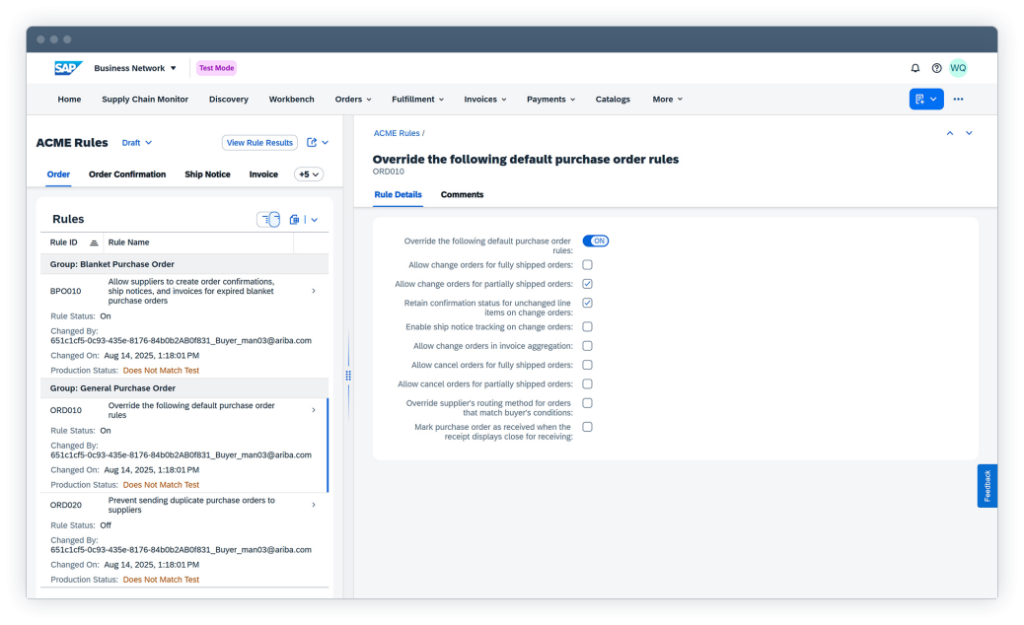
SAP Business Network (formerly SAP Ariba)
Software information:
Capterra rating: 3,8/5
G2 rating: 4,1/5
Features:
- Contract Lifecycle Management (CLM);
- Access to the Ariba Network (global interconnected network);
- Automated invoicing and high-volume spend analytics.
Pros:
- Scalability;
- Access to one of the world’s largest B2B partner networks;
- Strategic sourcing.
Cons:
- Complex user interface;
- Steep learning curve for new teams;
- High total cost of ownership (TCO);
- Limited integration with other applications.
One of the global leaders in procurement, SAP Business Network, formerly known as SAP Ariba, is a supplier management platform focused on connecting complex end-to-end procurement ecosystems. As a result, it is a natural choice for multinational corporations already using SAP ERP as their operational backbone, ensuring strong transaction-processing capabilities.
The platform is widely used by companies that prioritize structured procurement and invoicing workflows. However, the software comes with a learning curve driven in part by interface complexity. It is therefore a solid choice if your company can invest the time needed for adoption and training in order to take full advantage of the platform’s breadth and automation.
Oracle
Software information:
Capterra rating: 4,2/5
G2 rating: 4,1/5
Features:
- Native integration with Oracle ERP Cloud;
- Secure collaborative portal;
- Native predictive analytics;
- Continuous qualification.
Pros:
- Integration with enterprise databases and legacy ERPs;
- Strong financial data processing capabilities.
Cons:
- Custom workflow configuration can be rigid;
- Users often report dependence on advanced technical support or specialized consulting;
- Some features are considered limited;
- Less intuitive interface.
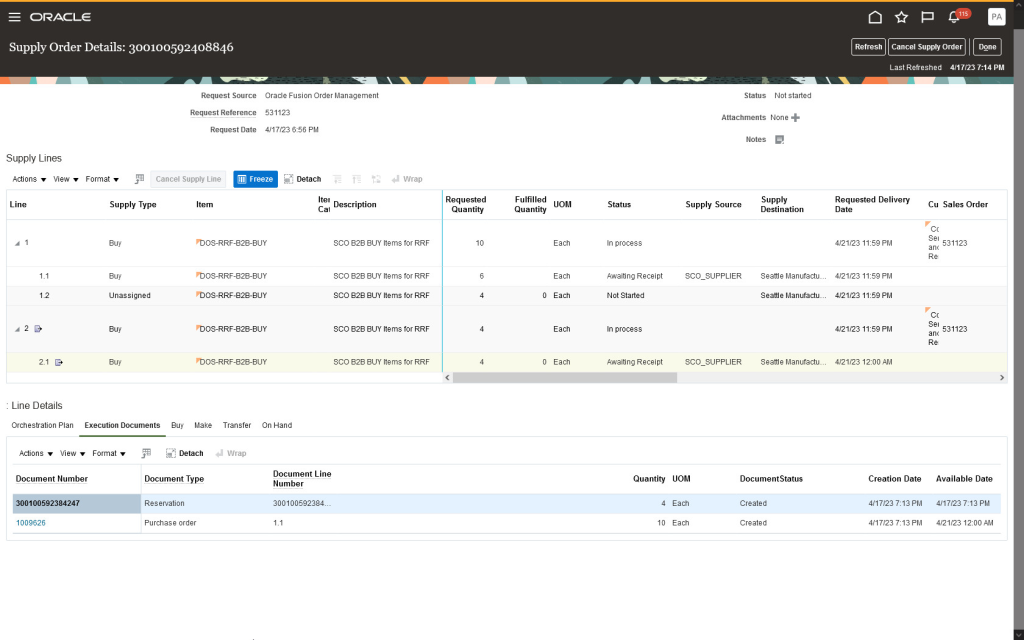
Oracle’s enterprise supplier management solution delivers a robust cloud-based infrastructure to streamline the Source-to-Settle journey. Oracle Fusion Cloud Procurement offers an integrated suite of source-to-pay capabilities that automates business processes, enables strategic sourcing, improves supplier relationship management, and simplifies purchasing.
With these capabilities, the system delivers outcomes such as lower regulatory risk, greater savings, and improved profitability. That makes it an ideal choice for leadership teams looking for a platform that ensures rigorous operational data centralization and strong financial compliance.
Coupa
Software information:
Capterra rating: 4/5
G2 rating: 4,2/5
Features:
- Unified Business Spend Management (BSM);
- Invoice automation;
- Intelligent expense management;
- Agile approval orchestration.
Pros:
- Intuitive user experience;
- Fast adoption;
- Strong visibility into corporate spend.
Cons:
- Highly specific reports and dashboards may require complex customization;
- Users report that technical support response times can be slow in some regions;
- Navigation between features can feel complex due to system slowness.
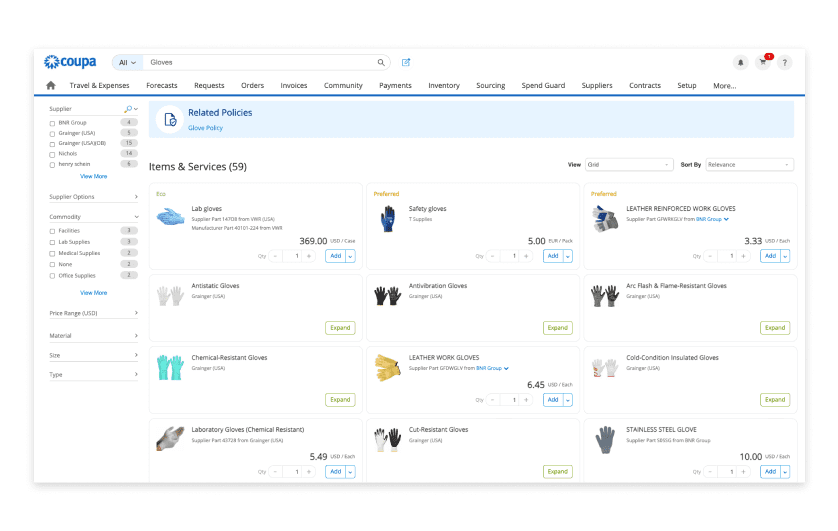
Coupa focuses on spend management and stands out in the supplier management software market for its usability. The platform maximizes B2B value by centralizing all categories of corporate spend in an agile environment, making operational adoption easier and more natural.
The system allows companies to manage invoicing, tax document issuance, and expense reporting, with most users being mid-sized and large enterprises. It is especially strong in spend visibility and procurement automation, although users frequently mention a steeper learning curve.
Keep reading: What is supplier management and how to do it sustainably
IBM
Software information:
Capterra rating: 4,7/5
G2 rating: 4,4/5
Features:
- Multi-tier visibility;
- Artificial Intelligence (IBM Watson) for risk prediction;
- Advanced inventory orchestration;
- Highly secure traceability.
Pros:
- Strong analytical capabilities supported by mature AI models;
- Military-grade data security architecture;
- Ideal for mitigating complex supply disruptions.
Cons:
- Requires a very high level of digital maturity;
- Implementations are often long and highly complex;
- Lower cost-effectiveness compared to similar competitors.
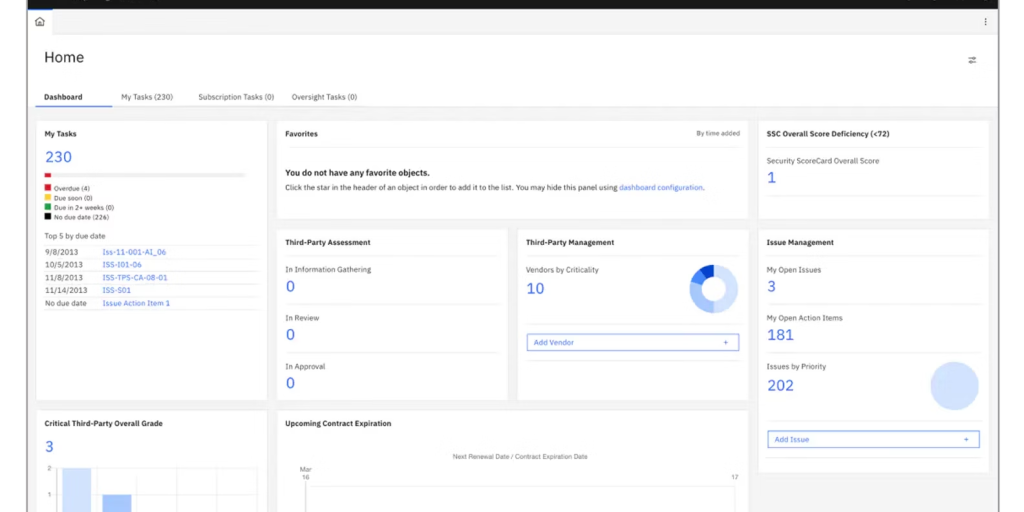
Built for global supply chains exposed to severe disruption, IBM’s solution offers advanced predictive capabilities that turn unstructured data into competitive intelligence to protect business continuity.
IBM Sterling Order Management System (OMS) provides comprehensive order management capabilities, including order capture, inventory visibility, delivery promise, and fulfillment orchestration across multiple channels.
GEP SMART
Software information:
Capterra rating: 4,6/5
G2 rating: 4,3/5
Features:
- Unified Source-to-Pay platform;
- Natively cloud-designed workflows;
- Seamless automation for direct and indirect procurement.
Pros:
- Cloud-native architecture;
- Smooth interface;
- Flexible configuration.
Cons:
- ERP integrations may require API development;
- Can be slow when uploading large volumes of data.
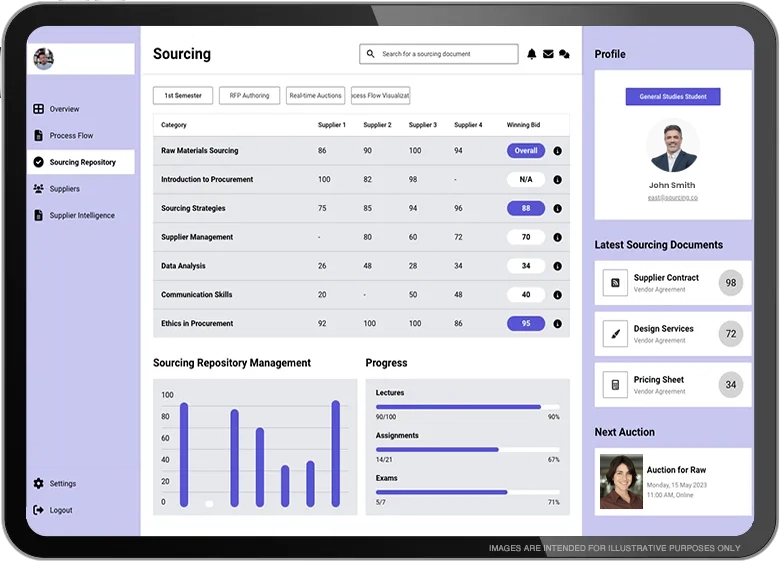
GEP SMART is a supplier management platform designed to harmonize supply chain execution. It unifies direct and indirect procurement processes, giving leaders a clear and actionable view of their supplier base.
The platform also provides category-level control for procurement managers and a consumer-like, intuitive purchasing experience for buyers.
JAGGAER
Software information:
Capterra rating: 4,1/5
G2 rating: 4,3/5
Features:
- Advanced technical sourcing;
- Contract Lifecycle Management (CLM);
- Supplier self-service portals.
Pros:
- Vertical specialization for the manufacturing industry
- Automation
- Easy tracking of procurement processes
- Module customization
Cons:
- Less user-friendly interface
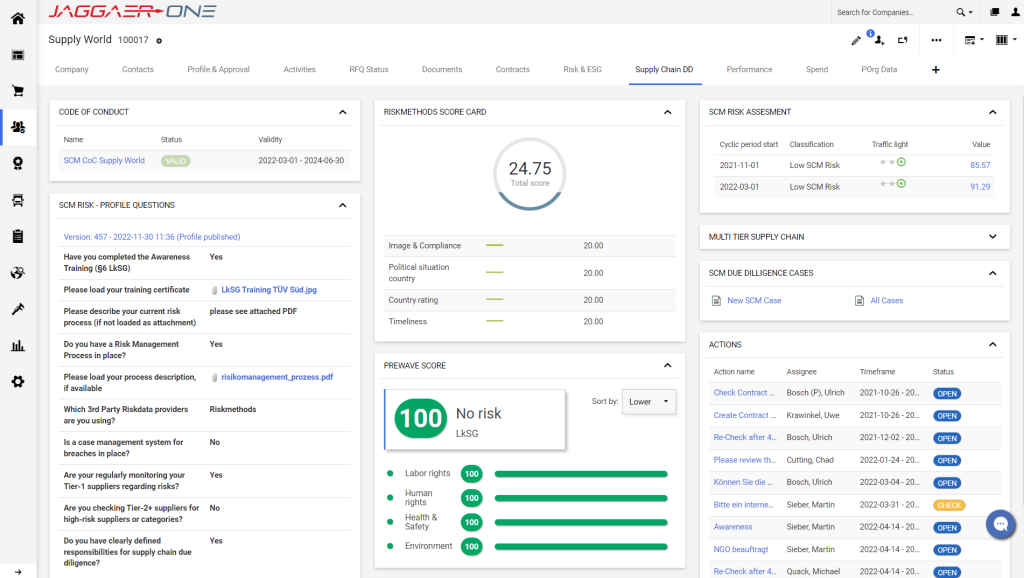
With a strong focus on B2B commerce in manufacturing, JAGGAER has evolved into a supplier management platform built for demanding operational environments. It is commonly used by companies whose direct supply networks require highly detailed technical specifications and complex qualification processes.
Ivalua
Software information:
Capterra rating: 3,8/5
G2 rating: 4,3/5
Features:
- Deep workflow orchestration
- Supplier Lifecycle Management (SLM)
- Compliance with sustainability guidelines
- Configurable reporting engine
Pros:
- Functional flexibility
- Ability to adapt the platform to business rules through low-code capabilities
Cons:
- Excessive configuration freedom can extend implementation timelines
- Users report performance and integration issues with other tools
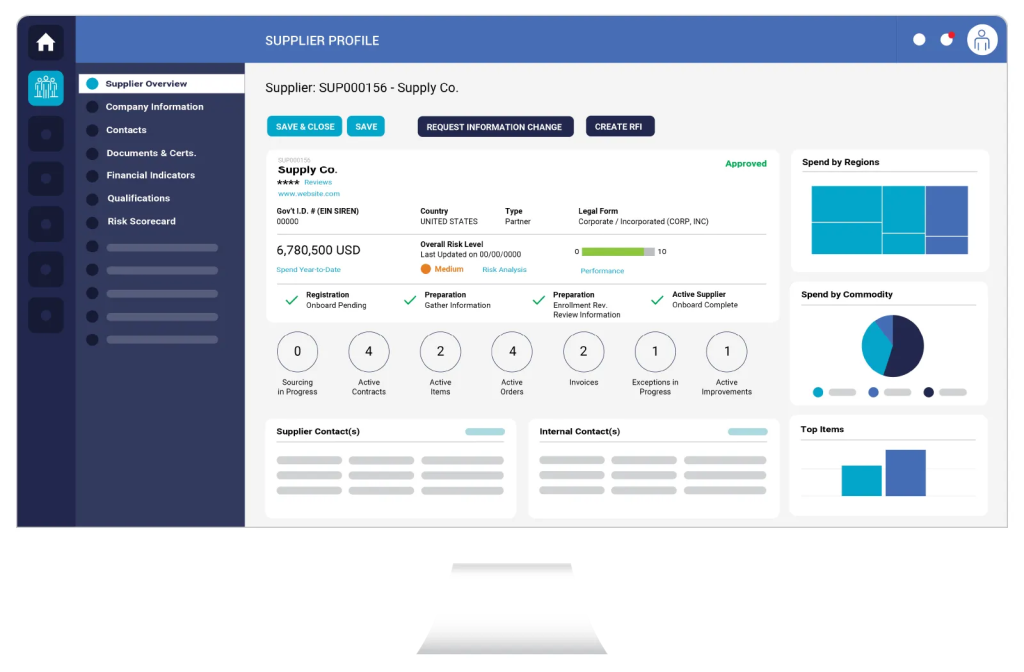
Ivalua is a supplier management platform that allows organizations to start with standard global configurations and progressively tailor the system to reflect the leadership team’s more specific and compliance policies. The solution emphasizes simple onboarding, a comprehensive portal, data and certificate validation, a Risk Center, and the use of GenAI.
Conclusion
Technology is the definitive bridge between executive strategy developed in the boardroom and flawless execution across the supplier base. But for that to happen, companies need an optimized, fully compliant supply chain. When that foundation is in place, the supply chain stops being a cost center and becomes one of the brand’s strongest competitive differentiators.
To support this process, choosing supplier management software should combine strategic requirements with technical validation and adoption considerations. For organizations that require industry-specific compliance and local integration, careful vendor evaluation, integration testing, and a well-measured pilot are decisive steps toward success.

FAQ about the best supplier management software
What is supplier management software (SLM)?
Supplier management software, also known as Supplier Lifecycle Management (SLM), is a solution that unifies multiple aspects of supplier management in a single platform. It is a centralized technology system designed to orchestrate the entire lifecycle of business partner relationships, from sourcing and initial qualification to performance management and offboarding. SLM replaces fragmented information sources, such as spreadsheets and emails, with a single, reliable data foundation known as a Single Source of Truth.
What are the key features of a supplier management system?
Leading platforms typically offer the following capabilities:
- Automated qualification and onboarding;
- Continuous risk and compliance management;
- Performance evaluation, including KPIs, SLAs, quality audits, and action plans (CAPA);
- Data governance and Artificial Intelligence (AI);
- A supplier portal that allows vendors to access data related to their performance, qualification status, and respond to nonconformities.
What are the benefits of using supplier management software?
Investing in this type of solution delivers returns that affect both business valuation and long-term sustainability. The main measurable benefits include:
- Resilience and business continuity, enabling companies to anticipate disruptions and quickly activate alternative networks;
- Competitive advantage through ESG, turning supply chain sustainability into a market asset;
- Cost reduction and operational efficiency;
- Operational efficiency and governance, supporting onboarding and nonconformity management.
How do you choose an SLM solution?
The selection should be made carefully, based on the corporation’s long-term needs, and should involve multiple departments across the company. The main criteria to consider are:
- Map regulatory maturity and alignment with business goals, ensuring the system supports audits and emerging regulations;
- Prioritize integration capabilities and cybersecurity, including robust APIs for ERP and CRM integration, as well as compliance with certifications such as ISO 27001;
- Take a holistic view by prioritizing all-in-one solutions that manage the supplier lifecycle through a GRC (Governance, Risk, and Compliance) lens.
What are the 8 best supplier management software options on the market?
The 8 leading software solutions highlighted for supplier management are:
- SoftExpert Suite (with a focus on SLM)
- SAP Business Network (formerly SAP Ariba)
- Oracle
- Coupa
- IBM
- GEP SMART
- JAGGAER
- Ivalua
Looking for more efficiency and compliance in your operations? Our experts can help identify the best strategies for your company with SoftExpert solutions. Contact us today!