Intelligent processes combine routine automation with Artificial Intelligence (AI) to interpret, decide, and execute tasks strategically. As a result, the focus shifts from merely repeating actions to analyzing data in real time, thereby eliminating errors, reducing operational costs, and accelerating more precise decision-making.
Among the shifts driving the mainstream adoption of these processes is the sharp acceleration of digital transformation in recent years. New platforms, automations, workflows, AI, analytical applications, and data-driven solutions have taken center stage within organizations.
At the same time, companies have begun operating in environments that are increasingly dynamic, interdependent, and pressured by speed, efficiency, compliance, scalability, and a continuous capacity for adaptation.
However, a critical realization is becoming increasingly evident in the corporate world: having more technology does not necessarily mean possessing more operational intelligence.
How to go beyond technology to truly optimize processes?
For many years, organizations invested heavily in creating metrics, dashboards, and management panels. Undoubtedly, these mechanisms brought important advancements for monitoring operations and tracking performance.
The problem is that a large portion of these frameworks remains predominantly backwards-looking. Dashboards show:
- what happened;
- how much happened;
- where it happened;
- and when a specific deviation occurred.
Yet, they frequently still offer little capability to:
- interpret root causes;
- correlate operational events;
- identify behavioral patterns;
- anticipate trends;
- recommend actions;
- or effectively support continuous operational improvement.
And this is perhaps one of the greatest challenges of contemporary management. Many organizations have digitized their processes, but few have effectively managed to transform operational execution into organizational intelligence.
The result is an increasingly common paradox. Companies possess more data, more indicators, and more automation than ever before, yet they continue to struggle with tasks such as:
- breaking down silos and integrating departments;
- reducing rework;
- increasing traceability;
- balancing workloads;
- consolidating reliable information;
- improving operational predictability;
- and transforming scattered data into effective decision-making capabilities.
What should represent an investment in innovation and operational evolution is, in many cases, beginning to produce a silent phenomenon within modern organizations: the ignorance of innovation.
How do intelligent processes drive real innovation?
As new technologies, automations, workflows, integrations, and platforms occupy a growing footprint within operations, the complexity of coordinating, tracing, and understanding the operational environment itself also increases.
In other words, operations keep running, workflows continue executing tasks, metrics are still delivered, and dashboards keep displaying performance. Gradually, however, the organization begins to lose the ability to understand:
- where the bottlenecks are;
- which activities consume the most operational effort;
- where rework occurs;
- which areas are operating over capacity;
- which workflows concentrate delays;
- which variables impact productivity;
- and which factors actually limit performance, efficiency, and operational sustainability.
This is the exact point where the paradox becomes clear. The more technology is incorporated, the harder it becomes to translate operational execution into managerial insight.
The issue is no longer just a lack of technology. It lies in the difficulty of converting technology into operational intelligence, analytical capability, process management, and effectively data-driven continuous improvement.
It is precisely in this context that intelligent processes are beginning to take on a new role within organizations. For a long time, intelligent processes were associated almost exclusively with task and workflow automation. Today, however, the concept is evolving into something much broader.
Intelligent processes now represent the ability to:
- integrate operations;
- increase traceability;
- correlate data;
- interpret operational behavior;
- monitor production capacity;
- identify deviations;
- anticipate risks;
- and support decisions focused on continuous improvement.
Simply put, the challenge goes beyond automating workflows. It involves building operations capable of seeing, interpreting, and continuously evolving based on the very data generated by operational execution.
This requires a major shift in mindset. Organizations must understand that merely monitoring operations is no longer enough. The new frontier of management lies in the ability to understand operations in real time, as there is a significant difference between viewing indicators and dynamically interpreting the organization’s operational behavior.
While many companies today can monitor their operations, few can truly understand them well enough to incorporate innovation. In practice, understanding all of this means:
- identifying patterns;
- correlating variables;
- interpreting root causes;
- anticipating deviations;
- identifying structural bottlenecks;
- and converting operational execution into managerial intelligence.
Using the right technology the right way is the differentiator for intelligent processes
It is precisely within this scenario that integrated management solutions begin to play a strategic role in the operational evolution of businesses. The SoftExpert Suite platform, through its various integrated components, allows for the structuring of an operational architecture capable of consolidating:
- processes;
- workflows;
- documents;
- indicators;
- SLAs;
- compliance;
- demand management;
- operational analytics;
- and governance mechanisms within a single management framework.
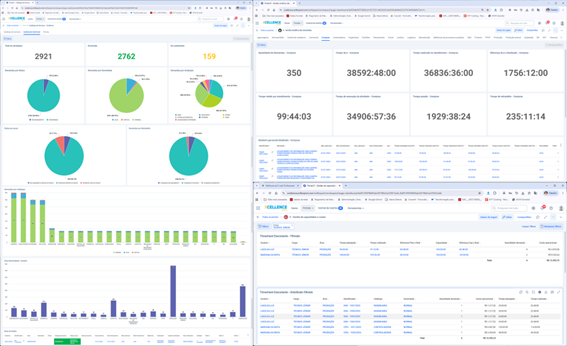
The image above illustrates an example of an operational environment developed by Xcellence using BPM software from the SoftExpert Suite. It highlights the practical application of intelligent processes focused on operational integration, analytics, and continuous improvement.
In practice, this means expanding visibility to manage:
- execution times;
- workloads;
- backlog;
- criticality;
- productivity;
- rework;
- operational deviations;
- production capacity;
- and operational behavior in real time.
This analytical capability allows management to move away from purely reactive operations. Consequently, the operation develops the framework to:
- prioritize tasks;
- redistribute efforts;
- anticipate impacts;
- correct deviations;
- reduce waste;
- optimize workflows;
- and continuously drive operational efficiency.
Ultimately, rather than just connecting systems, organizations need to connect:
- technology;
- processes;
- analytics;
- governance;
- operational capacity;
- and managerial intelligence within a single, evolutionary architecture.
Because, in the end, intelligent processes are not just about automation. They represent the capability to transform operational execution into continuous intelligence for decision-making and effective operational governance.
This is the new challenge of operational management: not just running processes, but finally learning to understand the operation and refine it through intelligent, predictive management.

Looking for more efficiency and compliance in your operations? Our experts can help identify the best strategies for your company with SoftExpert solutions. Contact us today!
FAQ – Intelligent Processes
Intelligent processes combine routine automation with Artificial Intelligence (AI) to interpret, decide, and execute tasks strategically. The focus is not just on repeating actions, but on analyzing data in real time to eliminate errors, reduce operational costs, and accelerate more precise decision-making.
Because a large portion of these frameworks remains predominantly backwards-looking, showing what, how much, where, and when a deviation occurred. They offer little capability to interpret root causes, correlate operational events, identify behavioral patterns, anticipate trends, recommend actions, or effectively support continuous operational improvement.
Companies struggle to break down departmental silos, reduce rework, increase traceability, balance workloads, consolidate reliable information, improve operational predictability, and transform scattered data into effective decision-making capabilities.
It is a phenomenon that occurs when the growth of new technologies, automations, and workflows increases the complexity of coordinating and understanding the operational environment. The organization loses the ability to understand where bottlenecks are, where rework occurs, which areas are operating over capacity, and which factors limit performance. In short, the more technology is incorporated, the harder it becomes to translate operational execution into managerial insight.
The concept has evolved from simple task automation to the ability to integrate operations, increase traceability, correlate data, and interpret operational behavior. They also make it possible to monitor production capacity, identify deviations, anticipate risks, and support decisions focused on continuous improvement.
Understanding operations means identifying patterns, correlating variables, interpreting root causes, anticipating deviations, identifying structural bottlenecks, and converting operational execution into managerial intelligence.
Integrated management solutions (such as the SoftExpert Suite platform) allow organizations to build an architecture that consolidates processes, workflows, documents, indicators, SLAs, analytics, and governance within a single management framework.
This expands visibility over execution times, workloads, criticality, rework, and operational behavior in real time. With this analytical capability, management moves away from a purely reactive approach and gains the tools to redistribute efforts, anticipate impacts, reduce waste, and continuously drive operational efficiency.